Discover More On:
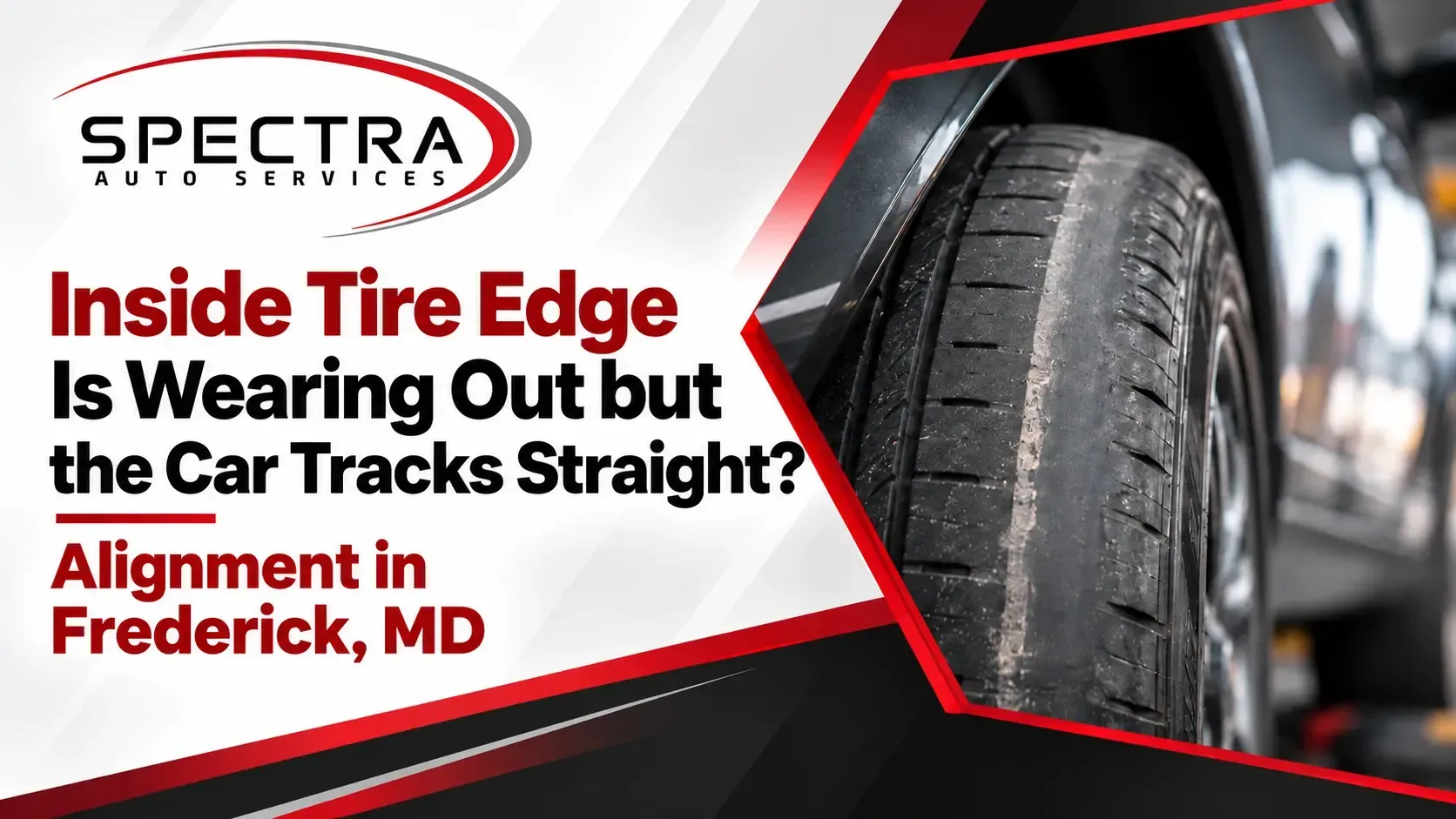
Inside Tire Edge Is Wearing Out but the Car Tracks Straight? Alignment in Frederick, MD
Discover More On:
Inside tire edge wear can develop even when your car tracks straight and the steering wheel looks centered. Small toe or camber errors may wear the inner shoulder without creating an obvious pull. Our alignment and tire wear inspection measures the wheel angles and checks the tire and chassis conditions that can change them.
Because the damage sits close to the vehicle, it is easy to miss. Check the full tread with the vehicle parked safely.
Why Inside Tire Edge Wear Can Happen Without Pulling
A car can travel straight while its wheels sit at angles that steadily remove rubber. Pulling reflects unequal forces, while balanced errors may cause wear without a strong steering symptom.
Camber Can Load the Inner Shoulder
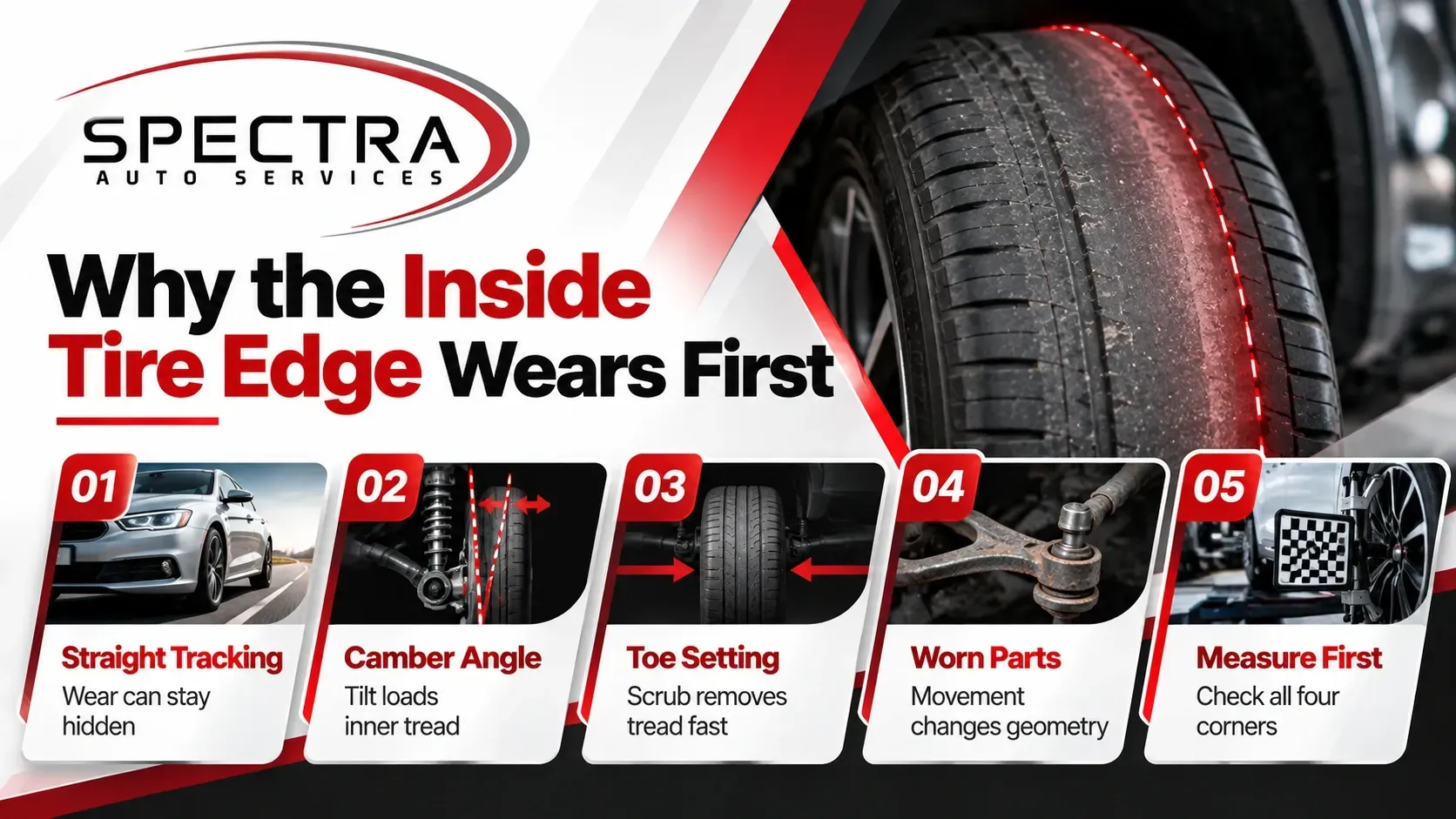
Negative camber means the top of the tire leans inward. Too much can load the inner tread, causing negative camber tire wear on one or both tires of an axle. Camber can move outside specification after a pothole strike or as suspension parts wear. The correct setting varies, so appearance alone cannot confirm the cause.
Toe Can Scrub Tread Without Changing Direction
Toe describes whether the tires point slightly toward or away from each other. Incorrect toe scrubs the tread sideways, even when opposing forces keep the car centered.
A feathered feel, with one edge of each tread block sharper than the other, can suggest toe-related wear. Measurement is still needed because other faults can look similar.
Other Problems That Can Wear the Inner Edge
Alignment readings are only part of the diagnosis. Worn parts can let wheel positions shift under braking, acceleration, or bumps.
Worn Suspension or Steering Parts
Loose tie rods, worn bushings, ball joints, wheel bearings, and weak ride-control parts can change wheel position. Our suspension, steering, and wheel services check those parts before an adjustment is treated as the complete repair.
A mechanical problem should be corrected before the final alignment when it prevents the vehicle from holding its settings.
Tire Pressure, Rotation, and Tire Condition
Low pressure often wears both shoulders, while high pressure tends to wear the center. Pressure differences, missed rotations, wheel damage, or a tire fault can complicate the pattern.
Rotation cannot replace missing tread or correct the cause. Cords, bulges, or deep cuts need prompt evaluation. Maryland's vehicle safety inspection guidance confirms that tires, steering, and suspension are checked for minimum safety standards.
Why Frederick Driving Can Hide the Pattern
Frederick drivers add miles quickly on I-70, I-270, US-15, and US-340. A small geometry error can repeat the same scrub through thousands of tire rotations.
Freeze-thaw cycles, potholes, and uneven Frederick County pavement can affect alignment or chassis parts. When a car tracks straight but tires wear unevenly, opposing angles, tire forces, or rear geometry are often masking the symptom.
This concern appears across many vehicle types. Toyota owners can also turn to our Toyota repair and maintenance team for suspension and alignment concerns across the lineup.
What an Alignment Inspection Should Check
A useful alignment visit connects the tire pattern, mechanical condition, and measured geometry.
Tire Wear and Pressure
The inspection should compare tread depth across every tire. Pressure, feathering, cupping, sidewall condition, age, and wheel damage show whether alignment is the only concern.
Steering and Suspension Condition
Tie rods, ball joints, bushings, wheel bearings, shocks, and struts should be checked for damage. Worn parts should be repaired before the final adjustment when they change wheel position.
Four-Wheel Measurements
A four-wheel alignment measures camber, caster, toe, and rear thrust angle as the vehicle allows. Rear geometry can affect front steering position even when the car seems straight.
At Spectra Auto Services in Frederick, MD, we use Hunter alignment equipment and manufacturer specifications. The results separate adjustable alignment errors from tire damage or needed chassis repairs.
When to Schedule an Alignment Check
Schedule a check when the inner shoulder looks smooth, the tread feels feathered, or wear returns after rotation. Curb strikes, potholes, suspension repairs, and new tires also justify measurement.
Do not wait for pulling. A wheel alignment in Frederick, MD, can find a small setting error while usable tread remains. Seek prompt help for bald tread, visible cords, pressure loss, or unstable handling.
Takeaways
Straight tracking does not prove every wheel angle is correct. Camber, toe, rear thrust angle, worn parts, and tire conditions can create wear without an obvious pull.
Inspect the full tread, especially after pothole or curb contact. Pair alignment measurements with tire, steering, and suspension checks before setting the repair plan.
Frequently Asked Questions
Can a car be out of alignment and still drive straight?
Yes, a car can be out of alignment and still drive straight. Similar errors on both sides, rear thrust angle, or competing tire forces may hide a pull while the tread continues to wear.
Is inside tire wear always caused by negative camber?
No, inside tire wear is not always caused by negative camber. Incorrect toe, worn suspension parts, tire damage, pressure problems, and missed rotations can create or worsen a similar pattern.
Can tire rotation fix inside edge wear?
No, tire rotation cannot fix existing inside edge wear or the condition causing it. Rotation may help even out future wear, but only if the tire is still serviceable and the alignment or mechanical fault has been corrected.
Should I replace worn tires before or after an alignment?
In most cases, replace unsafe tires and worn chassis parts before the final alignment. That way, the new tires start with corrected geometry.
How soon should inner-edge tire wear be inspected?
Inner-edge tire wear should be inspected as soon as you notice a clear difference across the tread. Seek prompt help if the edge is bald, cords are visible, pressure drops, or the vehicle's handling changes.
Schedule a Frederick Alignment and Tire Wear Check
Spectra Auto Services can measure the wheel angles, inspect the tires, and check the steering and suspension parts that help the settings stay stable. We will explain whether the next step is an adjustment, a mechanical repair, tire replacement, or a combination of services.
Schedule service at
324 N East St, Frederick, MD 21701, or call
(301) 695-5990 to request an alignment and tire wear check. Our shop serves Frederick drivers as well as nearby Walkersville, Urbana, Middletown, Brunswick, and Mount Airy communities.

Chris Adams
Hi, I’m Chris Adams, owner of Spectra Auto Services in Frederick, Maryland. I’ve spent 33 years in auto repair, including five years as a technician and 26 years as a service advisor and manager. For the past two years, I’ve owned the shop where I’ve worked since 1993.
I got into the trade because I enjoyed the challenge of figuring out why a vehicle wasn’t running right. The satisfaction came from fixing the problem and seeing the vehicle back on the road. My hands-on background is in auto electrical repair and drivability diagnostics.
I’m a 1993 Lincoln Technical Institute graduate, and I earned ASE Master Technician and Advanced Engine Performance Specialist certifications during my years in the bay. Today, I focus on running a shop built on transparency, honest recommendations, and digital vehicle inspections. I also prioritize ongoing training to keep our team up to date with the latest vehicle systems.
I’ve called Frederick County home for 40 years and served drivers here at Spectra for 33 of them. If you’re looking for an honest auto repair shop in Frederick, MD, our team is here to help.