
Discover More On:
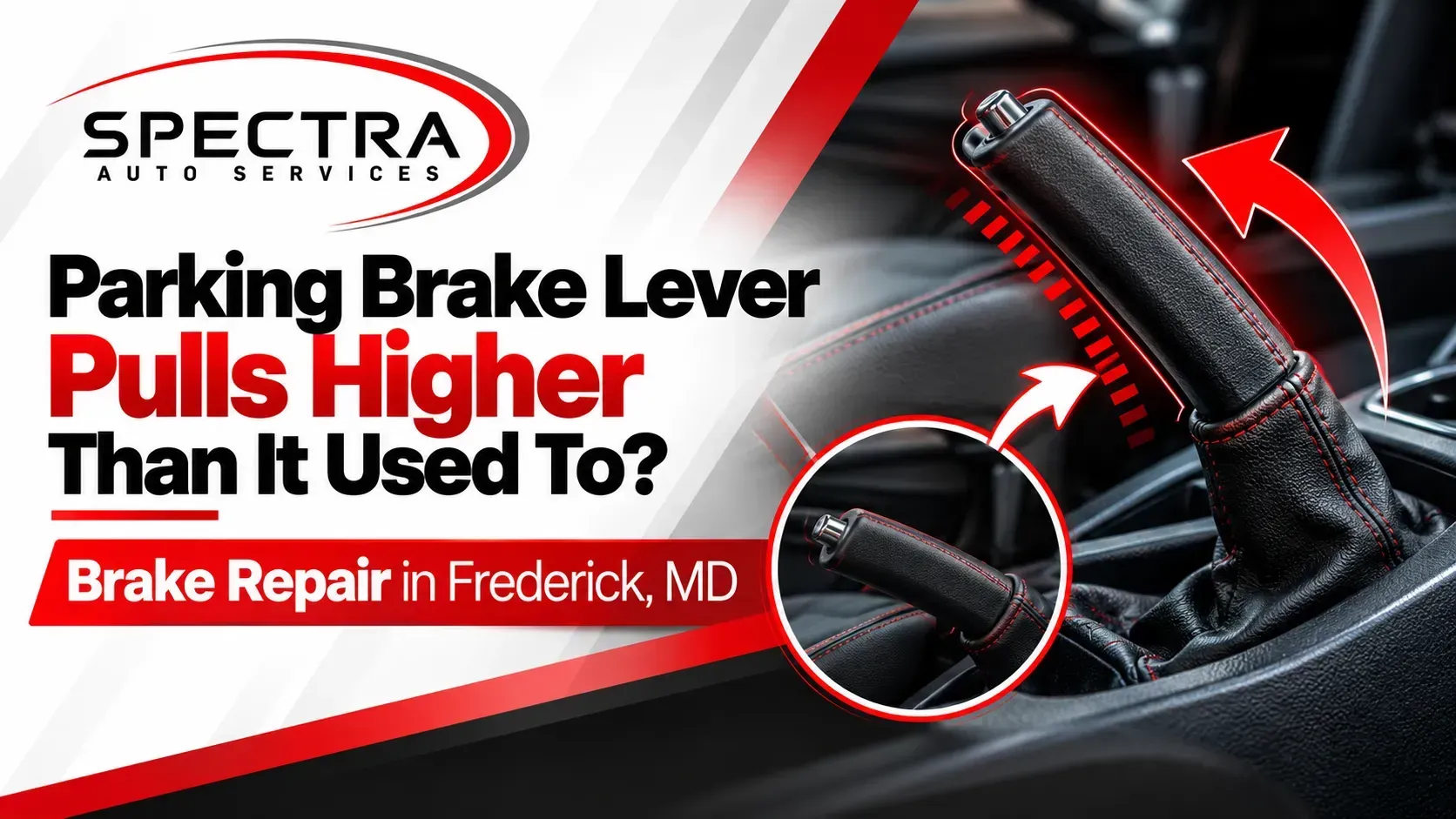
Parking Brake Lever Pulls Higher Than It Used To? Brake Repair in Frederick, MD
Discover More On:
When a parking brake lever pulls higher than it once did, the system may have cable slack, worn friction parts, or restricted hardware. Before any parking brake cable adjustment, we check how the system applies, holds, and releases.
A gradual change is easy to miss when the vehicle still holds on level ground. Check it before the lever reaches its limit or holding force weakens.
Why a Parking Brake Lever Pulls Higher
Extra travel means the system needs more movement before the brake applies firmly. Mechanical systems depend on the lever, cables, equalizer, rear brakes, and return hardware.
Cable Slack or Stretch
Mechanical cables can develop slack as parts wear and settle. A loose parking brake lever rises farther while the cable takes up that slack.
Adjustment may restore travel when the system remains serviceable. Tightening cannot fix a frayed cable, seized housing, damaged equalizer, or worn friction parts.
Worn Rear Brake Hardware
Some vehicles use separate shoes inside the rear rotor. Others use a rear-caliper mechanism. Wear in the friction parts, levers, or adjusters can increase needed travel. Newer vehicles may use an electronic parking brake. Our front and rear brake pads service uses the required service mode when an actuator affects rear brake work.
Corrosion or Restricted Movement
Road salt and water can corrode cables, pivots, springs, and hardware. A restricted cable may not slide smoothly, while seized parts may not apply or release fully. Uneven movement can add travel, reduce holding force, or leave a rear brake dragging after release.
Why the Vehicle May Still Hold for Now
A vehicle may still hold because the remaining travel applies the brakes on level pavement. That does not prove it has enough force for a steeper grade.
Wet pavement, ice, vehicle load, and slope change how secure the vehicle feels. Follow the owner's manual for selecting Park or the proper manual-transmission gear instead of relying on the parking brake alone.
What a Parking Brake Inspection Should Check
A complete inspection should find why lever travel changed and confirm proper holding and release. Checks vary for mechanical levers, pedals, and electronic switches.
Lever Travel and Holding Force
The technician checks travel, resistance, holding force, release operation, and the warning indicator.
Controlled testing and direct inspection provide better information than repeatedly pulling harder on the lever during normal parking.
Cables, Shoes, Calipers, and Hardware
Inspection may include cables, housings, the equalizer, pivots, springs, adjusters, rear shoes, calipers, and electronic actuators. This separates normal adjustment from wear or restriction.
On Toyota models, our Toyota repair and maintenance team follows each vehicle's parking brake design.
Service Brake Condition
The parking brake and service brakes may share rear components. Pads, shoes, rotors, drums, calipers, and hardware should be checked when they affect operation.
Maryland's vehicle safety inspection guidance lists brakes among the safety systems checked under the state program. Our Maryland state inspection service includes a brake-system check as part of the applicable inspection process.
When Extra Lever Travel Needs Prompt Attention
Arrange an inspection if you notice the parking brake not holding, the lever reaching its stop, or uneven release. Grinding, odors, warning lights, or unusual wheel heat may signal a broader concern.
Avoid driving when a brake remains applied, a wheel will not turn freely, or normal braking changes. Safe transport or towing may be needed.
Frederick Conditions That Affect Parking Brakes
Frederick County's winter moisture, salt, and freeze-thaw cycles can expose corrosion. Sloped driveways, downtown ramps, and rolling roads make reduced holding force easier to notice.
Drivers using I-70, US-15, and US-340 may miss a gradual change between stops. Check new symptoms before wet or icy weather adds another variable.
At Spectra Auto Services in Frederick, MD, we inspect mechanical and electronic parking-brake concerns across domestic, Asian, and European vehicles. We explain the findings before approved work begins.
Takeaways
A higher parking brake lever can result from cable slack, worn rear friction parts, corrosion, damaged hardware, or a mechanism that no longer moves correctly. Adjustment is appropriate only when inspection confirms the rest of the system can hold and release as designed.
Do not judge the system only by whether it holds on level ground. Schedule parking brake repair in Frederick, MD, when lever travel changes, holding force weakens, or the brake does not release cleanly.
Frequently Asked Questions
Can a parking brake lever get higher gradually?
Yes, a parking brake lever can rise higher gradually as cables settle or rear brake parts wear. Corrosion, restricted movement, or a damaged component can also change the lever's travel over time.
Will tightening the cable fix a high parking brake lever?
Tightening the cable may help only when adjustment is the confirmed cause and the remaining parts are serviceable. It will not fix worn shoes, seized cables, damaged hardware, faulty calipers, or electronic actuator problems.
Is it safe to drive with a loose parking brake lever?
Usually, as long as you do not rely on the parking brake to hold the vehicle until it is inspected. Avoid driving if a brake drags, a wheel remains restricted, normal braking changes, or the vehicle rolls after the brake is applied.
Why does the parking brake hold on flat ground but not on a hill?
A hill requires more holding force than level ground, so weak adjustment or worn parts may appear adequate only on a flat surface. The system should be inspected rather than tested repeatedly on a steep or unsafe grade.
How often should the parking brake be inspected?
The parking brake should be checked when its travel, feel, holding force, release, or warning indicator changes. It can also be evaluated during related rear brake service or a Maryland safety inspection.
Schedule Parking Brake Service in Frederick
Spectra Auto Services can check the lever travel, cables, rear brake hardware, caliper mechanisms, and applicable electronic actuators. We will explain whether the system needs adjustment, cleaning, replacement parts, or a broader brake repair.
Schedule service at 324 N East St, Frederick, MD 21701, or call (301) 695-5990 to request a parking-brake inspection. Our shop serves Frederick as well as nearby Walkersville, Urbana, Middletown, Brunswick, and Mount Airy communities.
Chris Adams
Hi, I’m Chris Adams, owner of Spectra Auto Services in Frederick, Maryland. I’ve spent 33 years in auto repair, including five years as a technician and 26 years as a service advisor and manager. For the past two years, I’ve owned the shop where I’ve worked since 1993.
I got into the trade because I enjoyed the challenge of figuring out why a vehicle wasn’t running right. The satisfaction came from fixing the problem and seeing the vehicle back on the road. My hands-on background is in auto electrical repair and drivability diagnostics.
I’m a 1993 Lincoln Technical Institute graduate, and I earned ASE Master Technician and Advanced Engine Performance Specialist certifications during my years in the bay. Today, I focus on running a shop built on transparency, honest recommendations, and digital vehicle inspections. I also prioritize ongoing training to keep our team up to date with the latest vehicle systems.
I’ve called Frederick County home for 40 years and served drivers here at Spectra for 33 of them. If you’re looking for an honest auto repair shop in Frederick, MD, our team is here to help.