
Discover More On:

Why Your Car Makes a Hissing Sound During Acceleration
Discover More On:
A hissing sound during acceleration often comes from air escaping through an intake or boost-system leak. However, an exhaust leak or pressurized cooling-system leak can produce a similar noise, making it difficult to identify the failed part by sound alone.
Our
engine diagnostic service combines your reported symptoms with inspection, scan data, and targeted testing. This helps us identify the source of the hissing sound before recommending a repair.
Why a Hissing Sound Changes Under Acceleration
Acceleration changes airflow, engine load, exhaust flow, and pressure in several systems. A small leak may be quiet at idle but become easier to hear when you press the accelerator.
Engine Load Changes Airflow and Pressure
The throttle opens as the engine needs more air, and a turbocharged engine may build boost. Exhaust volume also rises as engine speed and load increase. These changes can make a split hose, loose clamp, leaking gasket, or cracked pipe hiss more loudly.
Location and Timing Narrow the Search
Notice whether the sound comes from under the hood, near the firewall, beneath the floor, or behind the dashboard. Record whether it happens in Park, while moving, or during a highway merge. Do not touch hot, moving, or pressurized parts to locate it.
Common Causes of Hissing During Acceleration
The common causes involve intake air, turbo boost, exhaust gas, or pressurized coolant. Testing should follow the symptom pattern instead of assuming every hiss is a vacuum leak.
An Intake or Vacuum Leak
A damaged intake boot, disconnected hose, leaking manifold gasket, or vacuum-line fault can admit unmetered air. Vacuum leak symptoms may include rough idle, lean codes, hesitation, or stalling. Some leaks are loudest at idle, while others appear as airflow increases.
A Turbo Boost Leak
On a turbocharged vehicle, a loose clamp, split charge pipe, damaged intercooler hose, or leaking connection can release compressed air. A turbo boost leak may create a hiss or whoosh with reduced power, slow response, or a check engine light. Compare the sound with the vehicle's normal turbo noise.
An Exhaust Leak Near the Engine
An exhaust-manifold gasket, flange, flex pipe, or cracked component can hiss or tick as exhaust flow rises. The sound often follows engine speed and may be louder during a cold start or acceleration. Our exhaust leak and noise repair process checks the system for leakage before the repair scope is prepared.
Maryland's vehicle exhaust-system inspection standards require audible or visible leak signs to be inspected with the engine running when applicable. Exhaust odor inside the cabin deserves prompt attention.
A Pressurized Cooling-System Leak
Coolant can hiss when it escapes as liquid or steam from a hose, radiator, reservoir, cap, fitting, or other pressurized point. Heat and load during acceleration may make an existing weakness more noticeable. Our radiator, air conditioning and heater service includes pressure and leak testing matched to the suspected system.
Normal Airflow Versus a New Noise
Some vehicles produce a soft intake or turbo sound during normal acceleration. A new or louder hiss paired with lost power, warning lights, odor, or heat deserves inspection. Comparison can help, but it should not replace testing.
Clues That Help Separate the Causes
Related symptoms help direct the first tests. Tell the technician what the car feels like, what the gauges show, and whether the sound changes with engine speed or road speed.
Rough Idle, Lost Power, or a Check Engine Light
Rough idle and lean codes support an intake-air concern, while power loss under load may point toward boost, fuel, ignition, or exhaust restriction. A flashing check engine light with shaking can indicate an active misfire. Our recent check engine light diagnostic guide for Frederick explains why a code only starts the test plan.
Exhaust Odor, Ticking, or Noise Near the Floor
Exhaust smell, soot near a joint, cold-start ticking, or a hiss beneath the vehicle supports an exhaust inspection. Open windows do not correct a leak. Avoid driving when fumes enter the cabin or the system may contact the road.
Steam, Coolant Odor, or a Rising Temperature Gauge
Steam, a sweet coolant odor, a falling coolant level, or a rising temperature gauge points toward the cooling system. Do not remove a radiator or pressure cap while the system is hot. Escaping coolant and steam can cause severe burns.
When a Hissing Sound Requires Immediate Attention
The sound becomes urgent when it appears with overheating, steam, fumes in the cabin, severe power loss, or unstable engine operation. Move away from traffic before deciding what to do next.
Stop for Overheating, Steam, or Exhaust Fumes
Pull over and shut the engine off when the temperature gauge enters the hot range or steam appears. Seek fresh air if exhaust fumes enter the cabin or anyone feels dizzy, weak, nauseated, or develops a headache. Arrange a tow instead of reproducing the symptom.
Reduce Load for a Flashing Light or Severe Power Loss
Reduce speed and avoid hard acceleration if the check engine light flashes, the engine shakes, or power drops sharply. Stop safely and arrange towing when the condition continues. Driving under heavy load can add heat or damage before the cause is known.
How We Diagnose an Acceleration Hiss
Diagnosis begins by reproducing the sound under controlled conditions when it is safe to do so. The correct test depends on whether the evidence points toward intake, boost, exhaust, or cooling pressure.
Reproduce the Sound Safely
At Spectra Auto Services, we ask about temperature, throttle position, speed, warning lights, odor, and recent repairs when the hiss appears. A road test may reproduce it, while scan data can show fuel trims, airflow, boost, misfires, and temperature where supported.
Test the System That Matches the Evidence
Smoke testing can reveal some intake, boost, or exhaust leaks, while cooling systems require pressure testing. Inspection may find loose clamps, split hoses, soot, coolant residue, or damaged pipes. Vehicle-specific access also matters when diagnosing supported makes, including those covered by our Audi repair and maintenance service.
Frederick Driving Conditions That Reveal the Sound
A car hisses when accelerating most clearly as the load rises. Merging onto US-15 or I-70, climbing west of Frederick, or accelerating on East Street may make the sound easier to repeat. Downtown stop-and-go travel may reveal rough idle, heat, or odor instead. These conditions do not diagnose the problem, but they help describe it. Drivers seeking engine diagnostics in Frederick, MD, should note speed, engine temperature, throttle demand, warning lights, and whether the sound stops when the accelerator is released.
Takeaways
A hiss under acceleration may come from an intake, boost, exhaust, or cooling-system leak. Several systems can create a similar noise. Location, timing, power changes, odor, and temperature help direct testing.
Stop for overheating, steam, cabin fumes, a flashing check engine light with severe shaking, or major power loss.
Frequently Asked Questions
Can I drive if my car hisses when accelerating?
You may drive briefly when the hiss is mild and power, temperature, and warning lights remain normal. Stop and arrange help for steam, overheating, cabin fumes, a flashing check engine light, severe shaking, or major power loss.
Can a vacuum leak cause a hissing sound only during acceleration?
Yes, some intake or vacuum leaks become louder as airflow changes or a damaged connection opens under load. Many also appear at idle, so testing should confirm the timing.
What does a turbo boost leak sound like?
A turbo boost leak often sounds like a hiss or whoosh that grows with boost. Reduced power or a warning light may occur, but those signs have other possible causes.
Can an exhaust leak hiss when I press the gas?
Yes, an exhaust leak can hiss or tick louder as the exhaust flow increases. Cabin odor, soot near a joint, or noise near the firewall makes prompt inspection more important.
Can low coolant cause a hissing noise?
Low coolant does not create one specific sound, but a pressurized cooling-system leak can hiss. Rising temperature, steam, or a falling coolant level calls for shutdown and inspection after cooling.
Schedule Hissing-Noise Diagnostics in Frederick
Spectra Auto Services can test the intake, boost, exhaust, and cooling systems that may cause a hiss under load. Call
(301) 695-5990 to schedule diagnosis, or visit us at
324 N East St, Frederick, MD 21701. We will document the findings and explain the repair options before authorized work begins..
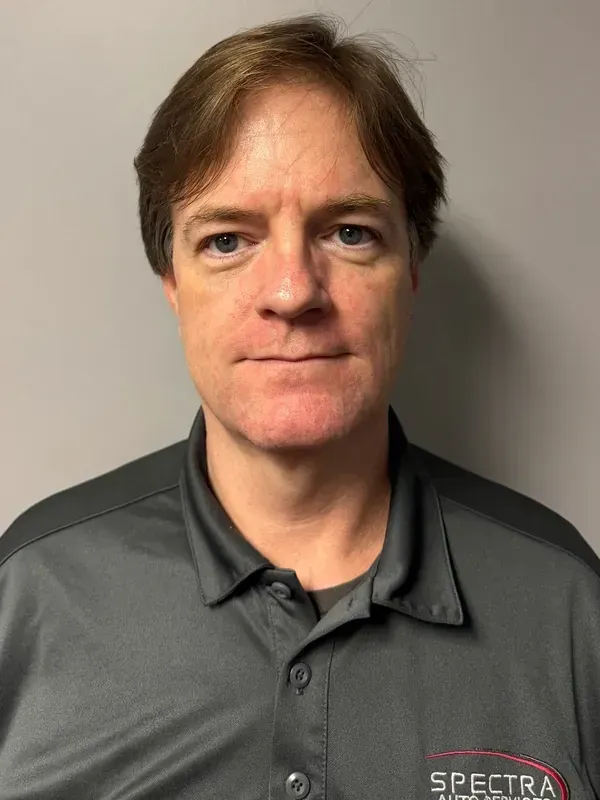
Chris Adams
Hi, I’m Chris Adams, owner of Spectra Auto Services in Frederick, Maryland. I’ve spent 33 years in auto repair, including five years as a technician and 26 years as a service advisor and manager. For the past two years, I’ve owned the shop where I’ve worked since 1993.
I got into the trade because I enjoyed the challenge of figuring out why a vehicle wasn’t running right. The satisfaction came from fixing the problem and seeing the vehicle back on the road. My hands-on background is in auto electrical repair and drivability diagnostics.
I’m a 1993 Lincoln Technical Institute graduate, and I earned ASE Master Technician and Advanced Engine Performance Specialist certifications during my years in the bay. Today, I focus on running a shop built on transparency, honest recommendations, and digital vehicle inspections. I also prioritize ongoing training to keep our team up to date with the latest vehicle systems.
I’ve called Frederick County home for 40 years and served drivers here at Spectra for 33 of them. If you’re looking for an honest auto repair shop in Frederick, MD, our team is here to help.