Discover More On:
The Ultimate Guide to Maryland State Inspections: What Frederick Drivers Need to Know
Discover More On:
If you have just bought a used car in Maryland or are new to the state, you have probably heard about the Maryland vehicle safety inspection. This mandatory safety check is a key step in the vehicle registration process. For drivers in Frederick, knowing what to expect can make the entire experience quick and stress-free.
This guide breaks down everything you need to know about the Maryland vehicle inspection process, from what we check to how to prepare your car. When you are ready to book, visit our page on state inspection in Frederick, MD for scheduling details and what to expect at our shop.
Why Does Maryland Require a Vehicle Safety Inspection?
The primary goal of the state inspection is to ensure every vehicle on the road is safe. This protects you, your passengers, and everyone else sharing the roads in our community. The inspection verifies that critical components like brakes, lights, and steering are in proper working order. This is especially important for used cars, where the history of maintenance may not be fully known.
When Do You Need a Maryland State Inspection?
You must get a safety inspection in these common situations:
- You are registering a used vehicle in Maryland for the first time.
- You are buying a used vehicle from a private seller and transferring the title into your name.
- You are moving to Maryland from another state and need to register your vehicle here.
- Your repaired vehicle has a “Salvage” title. It must first pass a separate Maryland State Police salvage inspection, then a standard safety inspection.
If you buy from a Maryland dealer, the dealer usually handles the title and registration for you. If you are unsure whether you need an inspection, our team at Spectra Auto Services can help you figure it out.
Buying from a private seller? An independent used-car inspection before you buy can reveal problems the state checklist does not cover.
Only stations licensed by the Maryland State Police can perform the inspection, and each station sets its own fee. If your vehicle has to pass before it can be registered, you may qualify for a 30-day temporary registration to drive it to the inspection. This safety inspection is also separate from Maryland’s Vehicle Emissions Inspection Program (VEIP), which tests qualifying vehicles every two years.
What’s on the Maryland State Inspection Checklist?
The Maryland inspection is a comprehensive examination of your vehicle’s major safety systems. As a Maryland State Police-licensed inspection station, our technicians follow a strict checklist, and most inspections take one to two hours when no repairs are needed.
Key areas we inspect include:
- Brake System: We check your brake pads, rotors, drums, lines, and fluid, along with pedal feel, the brake warning light, and the parking brake. Your ability to stop safely is our top priority, and our brake repair specialists can correct anything that falls short.
- Steering and Suspension: This includes checking for worn components like tie rods and ball joints, which affect your control of the vehicle and may call for suspension and steering repair.
- Tires and Wheels: We measure tread depth and look for cuts, bulges, and mismatched tires on the same axle. Maryland requires at least 2/32 inch of tread, but deeper tread grips far better on wet Frederick streets or on I-70.
- Lights and Electrical Systems: All headlights (high and low beams), taillights, brake lights, turn signals, and hazard lights must work correctly. When a light fails for reasons beyond a bulb, auto electrical repair can trace the wiring fault.
- Windshield and Wipers: We check for cracks or chips larger than 1/2 inch in the area your wipers sweep, or larger than 1/4 inch directly in front of the driver. Your wipers must also work properly and clear the windshield.
- Window Tint: Aftermarket tint on regulated windows must let at least 35 percent of light through, and mirrored, red, yellow, or amber tint is not allowed.
- Mirrors and Horn: Your required rearview mirrors must be in place and free of cracks that block your view, and your horn must work.
- Seat Belts: Every belt must buckle, latch, and retract properly, with no frayed or torn webbing.
- Exhaust System: The system is checked for leaks, which can be both dangerous and harmful to the environment.
- Fuel System: We look for any leaks in the fuel tank or lines.
- Body and Chassis: The vehicle’s frame is inspected for excessive damage or corrosion that could compromise safety.
- Doors, Hood, and Bumpers: Doors and the hood must latch securely, and bumpers must be firmly mounted with no sharp edges sticking out.
- Speedometer, Odometer, and VIN: Your speedometer and odometer must work, and the vehicle identification number (VIN) must be visible and unaltered.
What Happens After the Inspection?
There are two possible outcomes:
You Pass: Congratulations! Your passing certificate is sent electronically to the Maryland Motor Vehicle Administration (MVA), and you may receive a paper or electronic receipt for your records. The certificate is valid for 90 days, so complete your title and registration before it expires.
You Fail: If your vehicle does not pass, we will provide you with a detailed report listing the specific items that need repair. This is not the end of the road. Here is what happens next:
- Get the Repairs Done: You can have the necessary repairs completed by our team or at any qualified auto repair shop.
- Return for Reinspection: Bring the vehicle back to the same station that inspected it within 30 days and before driving 1,000 miles. Only the failed items are rechecked, and a reinspection fee may apply unless the repair can be verified visually.
- Watch the Deadline: If you miss the 30-day window or go over 1,000 miles, the vehicle needs a full new inspection.
To avoid a failed result in the first place, see the top reasons cars fail state inspection in Maryland.
How to Prepare Your Car for a Smoother Inspection
While you cannot “pre-fix” everything, a few simple checks can increase your chances of passing on the first try.
- Check Your Lights: Walk around your car and test all your lights. Have a friend confirm your brake lights work, or park near a reflective surface.
- Test Your Wipers: Turn on your wipers. If they streak or skip, replace them.
- Look for Warning Lights: A brake warning light that is burned out or lights up when you press the pedal will fail the safety inspection. A “Check Engine” light is tied to Maryland’s separate emissions test rather than the safety checklist, but it is smart to diagnose your check engine light and any other warning light before your appointment.
- Inspect Your Tires: Look for obvious wear, cuts, or bulges. If your tread is close to Maryland’s 2/32-inch minimum, it is time for new tires.
- Test the Horn and Seat Belts: Tap the horn and make sure every seat belt buckles, releases, and retracts smoothly.
- Look Under Your Car: Drips under a parked car can point to a fuel or brake fluid leak, both of which will fail the inspection.
- Have Your Paperwork Ready: Your vehicle must be registered in Maryland or another state, or have a temporary registration, before it can be inspected.
Maryland State Inspection FAQs
Do I need a Maryland safety inspection every year?
No. Maryland requires the safety inspection when an applicable vehicle is first titled in the state, such as after a used-car purchase or a move from another state. There is no annual safety inspection.
Is the safety inspection the same as the emissions test?
No. The Vehicle Emissions Inspection Program (VEIP) is a separate test that qualifying vehicles complete every two years. Passing one does not satisfy the other.
How long is a Maryland inspection certificate valid?
The certificate is valid for 90 days from the date it is issued. Complete your title and registration within that window.
Can I drive my car before it passes inspection?
If your vehicle cannot be registered until it passes, you may qualify for a 30-day temporary registration. That lets you legally drive the vehicle to an inspection station.
Trust Spectra Auto Services with Your Maryland State Inspection
Family-trusted in Frederick since 1989, our team knows the Maryland inspection process inside and out. Our goal is to be efficient and transparent, so we clearly explain what we are checking and provide a straightforward report of our findings.
We make the process simple. If your car does not pass, we can provide you with a fair and accurate estimate to perform the necessary repairs. Our repairs are backed by warranties on parts and labor, giving you confidence in the work we do.
Don’t let the state inspection process be a source of stress. Contact
Spectra Auto Services today at (301) 695-5990 or book online to schedule your Maryland State Vehicle Inspection. We are here to help you get your car safely on the road in Frederick.
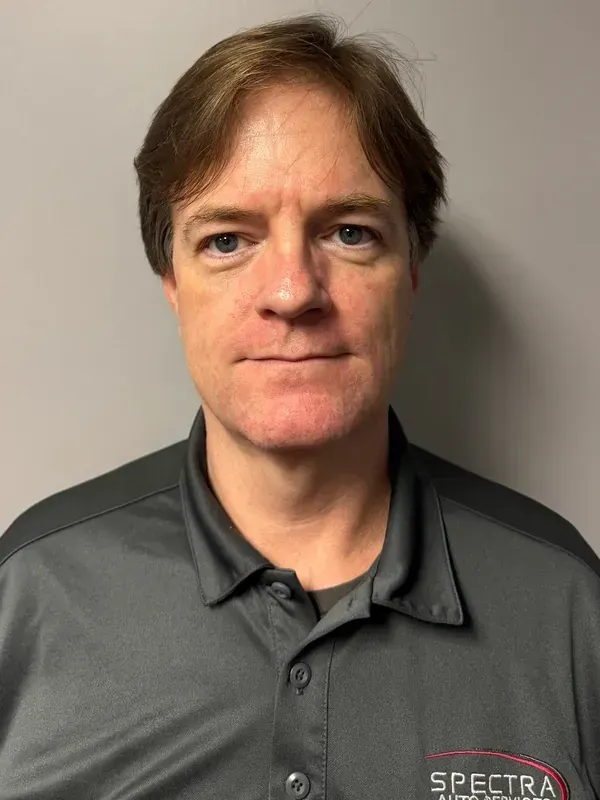
Chris Adams
Hi, I’m Chris Adams, owner of Spectra Auto Services in Frederick, Maryland. I’ve spent 33 years in auto repair, including five years as a technician and 26 years as a service advisor and manager. For the past two years, I’ve owned the shop where I’ve worked since 1993.
I got into the trade because I enjoyed the challenge of figuring out why a vehicle wasn’t running right. The satisfaction came from fixing the problem and seeing the vehicle back on the road. My hands-on background is in auto electrical repair and drivability diagnostics.
I’m a 1993 Lincoln Technical Institute graduate, and I earned ASE Master Technician and Advanced Engine Performance Specialist certifications during my years in the bay. Today, I focus on running a shop built on transparency, honest recommendations, and digital vehicle inspections. I also prioritize ongoing training to keep our team up to date with the latest vehicle systems.
I’ve called Frederick County home for 40 years and served drivers here at Spectra for 33 of them. If you’re looking for an honest auto repair shop in Frederick, MD, our team is here to help.