Discover More On:
The Top Reasons for Failed State Inspections in Maryland
Discover More On:
This is a subtitle for your new post

If you’re a Maryland driver, you know that passing a state inspection is a necessary step for registering a vehicle or transferring ownership. What many drivers don’t realize is how common inspection failures are and how easily they can be prevented. Family-trusted in Frederick since 1989, Spectra Auto Services breaks down what makes a car fail inspection in Maryland and how you can avoid it.
Understanding Maryland’s Vehicle Inspection Requirements
Maryland requires most used vehicles to pass a safety inspection at a Maryland State Police-licensed station before they can be sold, titled, or transferred. The inspection follows the state’s official checklist, which covers:
- Steering, suspension, and wheel alignment
- Braking system and parking brake
- Tires and wheels
- Exhaust and fuel systems
- Lights, horn, and electrical
- Windshield, glass, window tint, and mirrors
- Wipers, seat belts, doors, bumpers, and more
Vehicles that don’t meet the state’s safety standards must be repaired and pass reinspection before a certificate can be issued. For a full walkthrough of requirements and the inspection checklist, read our complete guide to Maryland state inspections. Spectra Auto Services also offers free multi-point vehicle inspections that can catch these problems before your inspection date.
What Will Fail a Car Inspection in Maryland?
The most common failure items are worn brakes, tires with less than 2/32 inch of tread, burned-out lights, and worn steering or suspension parts. Windshield damage, dark window tint, exhaust leaks, fuel or brake fluid leaks, missing mirrors, and seat belts with frayed webbing, faulty buckles, or weak retractors can also fail a vehicle. Here is a closer look at the top 10 and how to fix them.
1. Brake System Issues
Worn brake pads, leaking brake lines, or damaged rotors are among the most frequent causes of inspection failure. Pads with less than 2/32 inch of lining, a brake fluid reservoir less than half full, a pedal with too little travel left, or a parking brake that won’t hold are all rejection items. Even a minor hydraulic leak can result in a rejection.
What to do: Listen for squeaking, grinding, or a soft brake pedal, and have your brake system inspected regularly. We often perform brake checks in our Frederick shop ahead of inspection dates. If your pads are worn, brake pad replacement before inspection day can prevent a rejection.
2. Tire Tread and Condition
Maryland requires at least 2/32 inch of tread in every major groove, but we recommend replacing tires well before they reach that minimum. Cuts, sidewall cracks, bulges, and mismatched tire sizes or types on the same axle can also result in failure.
What to do: Use the penny test: insert a penny into your tread with Lincoln’s head down. If you can see the top of his head, it’s time for new tires. Uneven wear may point to alignment issues, which we frequently correct with wheel alignment service at Spectra Auto Services.
3. Faulty Lights and Electrical Problems
A single non-functioning brake light, turn signal, or headlamp can lead to an inspection failure. Inspectors also check your dashboard indicators, reverse lights, and hazard lights. When the problem goes deeper than a bulb, electrical system repair can trace the wiring fault behind it.
What to do: Test all your vehicle lights and replace any burnt-out bulbs or cracked lenses. If a dashboard warning light is on, such as for your airbags or check engine, have it diagnosed before inspection day. A check engine light is checked during Maryland’s separate VEIP emissions test, so check engine light diagnostics can save you trouble at both appointments.
4. Suspension and Steering Wear
If your steering wheel feels loose or you notice unusual noises when driving over bumps, it could be a sign of worn suspension or steering components. These are critical for control and stability, making them a high priority during inspections.
What to do: Have your vehicle inspected for worn ball joints, bushings, or shocks, and ask about strut replacement if the car bounces or dips over bumps. In Frederick, our team at Spectra Auto Services frequently finds and fixes minor issues before they become safety concerns.
5. Worn or Broken Windshield Wipers
It might sound minor, but faulty wipers can cause a failed inspection. Wipers that don’t work, broken or missing arms or blades, weak arm tension, or arms that won’t return to the park position are all rejection items.
What to do: Make sure your wipers aren’t streaking or skipping and that they park correctly when switched off. If the wipers leave large patches or make noise, it’s time to replace them, and keeping washer fluid topped off helps you see clearly in bad weather.
6. Cracked Windshields and Illegal Window Tint
Any crack or chip larger than 1/2 inch in the area your wipers sweep will fail inspection, and the limit drops to 1/4 inch in the zone directly in front of the driver. Aftermarket tint must also let at least 35 percent of light through on regulated windows. Even small chips can turn into larger cracks over time, so they shouldn’t be ignored.
What to do: Repair or replace damaged glass before the inspection, and remove any tint that is too dark or reflective.
7. Exhaust System Leaks
Exhaust leaks, holes, temporary patches, or a missing muffler are flagged during inspections. These leaks can allow harmful fumes to enter the cabin and may affect vehicle emissions.
What to do: Pay attention to strong exhaust smells or an increase in engine noise. Our Frederick shop checks for rusted pipes, loose connections, and damaged mufflers. If the muffler is rusted through, muffler replacement can stop the leak before inspection day.
8. Fluid Leaks
Visible leaks from your engine, transmission, brake lines, or other components are serious red flags. Fuel and brake fluid leaks are rejection items, and inspectors also check fluid lines and hoses for leaks or damage.
What to do: Check for stains or puddles under your parked vehicle. Even small leaks can signal larger problems, so have our team trace the source before inspection day. Brown or black drips often call for engine oil leak repair, while fuel or brake fluid leaks need attention right away.
9. Loose or Damaged Bumpers and Body Panels
While aesthetics aren’t the focus of Maryland’s inspection, structural integrity matters. Broken, missing, or loosely mounted bumpers, sharp protruding edges, and rusted-through floor or trunk pans can all fail inspection.
What to do: Ensure all panels are secure and free of sharp or protruding edges. Small cosmetic repairs can go a long way in ensuring a smooth inspection process.
10. Non-Operational Horn or Mirrors
Your horn must work and be within the driver’s reach, and every required mirror must be in place. A missing required mirror, or one cracked or clouded enough to block your rear view, will fail inspection.
What to do: Give your horn a quick test and visually inspect your mirrors for cracks or loose mounts. These are often quick and affordable fixes that we handle regularly at our Frederick shop.
What Happens If Your Car Fails a Maryland State Inspection?
A failed inspection isn’t the end of the road. You’ll receive a receipt listing every item that needs to be repaired, and you can have the work done at the inspection station or at another repair shop.
Once repairs are complete, return to the same station that inspected your vehicle within 30 days and before driving 1,000 miles. Only the failed items are rechecked, and a reinspection fee may apply unless the repair can be verified visually. If you miss either limit, the vehicle needs a full new inspection.
After your vehicle passes, the certificate is sent electronically to the MVA and stays valid for 90 days. Our state safety inspection page explains how we handle results, estimates, and reinspection at our Frederick shop.
Preparing for Inspection Success in Frederick, MD
Passing your state inspection on the first try doesn’t have to be stressful. At Spectra Auto Services, we encourage routine auto maintenance and offer free multi-point vehicle inspections to help our customers avoid unnecessary rejections. With Maryland’s inspection covering so many systems, a comprehensive approach is your best bet.
- Walk around the car with a helper to confirm every exterior light works, including brake lights and turn signals.
- Use the penny test on each tire and look for cuts or bulges.
- Run the wipers and replace blades that streak, skip, or chatter.
- Tap the horn, check your mirrors, and test every seat belt, not just the driver’s, for fraying, secure latching, and smooth retraction.
- Look under the car for fresh drips after it has been parked overnight.
- Have any dashboard warning light diagnosed before your appointment.
- Bring proof that the vehicle is registered in Maryland or another state, or has a temporary registration.
- Schedule early so repairs and reinspection fit within your title or registration timeline.
Maryland State Inspection Failure FAQs
Will a check engine light fail a Maryland safety inspection?
The check engine light is not on the Maryland safety inspection checklist. It does matter for the separate VEIP emissions test, so have it diagnosed before that appointment.
How much tread do my tires need to pass in Maryland?
Your tires need at least 2/32 inch of tread in every major groove. Inspectors measure at several points around each tire.
Is a cracked windshield an automatic fail in Maryland?
Not always. A crack or chip fails when it is larger than 1/2 inch in the area your wipers sweep, or larger than 1/4 inch in the 8-by-5-inch zone directly in front of the driver.
Will window tint fail a Maryland inspection?
It can. Aftermarket tint on regulated windows must allow at least 35 percent light transmittance, and mirrored, red, yellow, or amber tint is not allowed.
What happens if I miss the 30-day reinspection window?
If more than 30 days pass or the vehicle is driven over 1,000 miles, it needs a full new inspection rather than a recheck of the failed items.
Schedule Your Maryland State Inspection in Frederick
Don’t let a burned-out bulb or worn brake pad cost you a second trip to the inspection station. Call
Spectra Auto Services at (301) 695-5990 or book online to schedule your Maryland state inspection in Frederick. We’re proud to serve Frederick and surrounding communities with honest, transparent guidance to keep your vehicle in compliance and on the road.
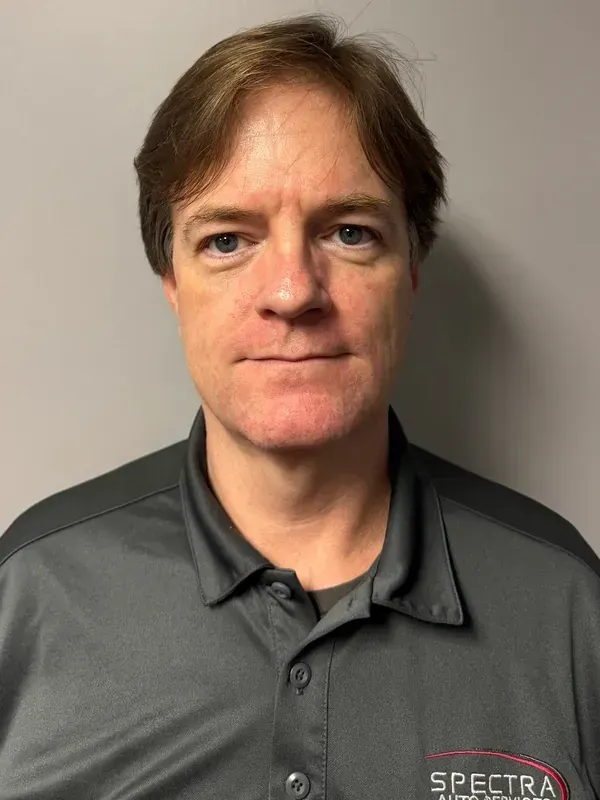
Chris Adams
Hi, I’m Chris Adams, owner of Spectra Auto Services in Frederick, Maryland. I’ve spent 33 years in auto repair, including five years as a technician and 26 years as a service advisor and manager. For the past two years, I’ve owned the shop where I’ve worked since 1993.
I got into the trade because I enjoyed the challenge of figuring out why a vehicle wasn’t running right. The satisfaction came from fixing the problem and seeing the vehicle back on the road. My hands-on background is in auto electrical repair and drivability diagnostics.
I’m a 1993 Lincoln Technical Institute graduate, and I earned ASE Master Technician and Advanced Engine Performance Specialist certifications during my years in the bay. Today, I focus on running a shop built on transparency, honest recommendations, and digital vehicle inspections. I also prioritize ongoing training to keep our team up to date with the latest vehicle systems.
I’ve called Frederick County home for 40 years and served drivers here at Spectra for 33 of them. If you’re looking for an honest auto repair shop in Frederick, MD, our team is here to help.