
Discover More On:
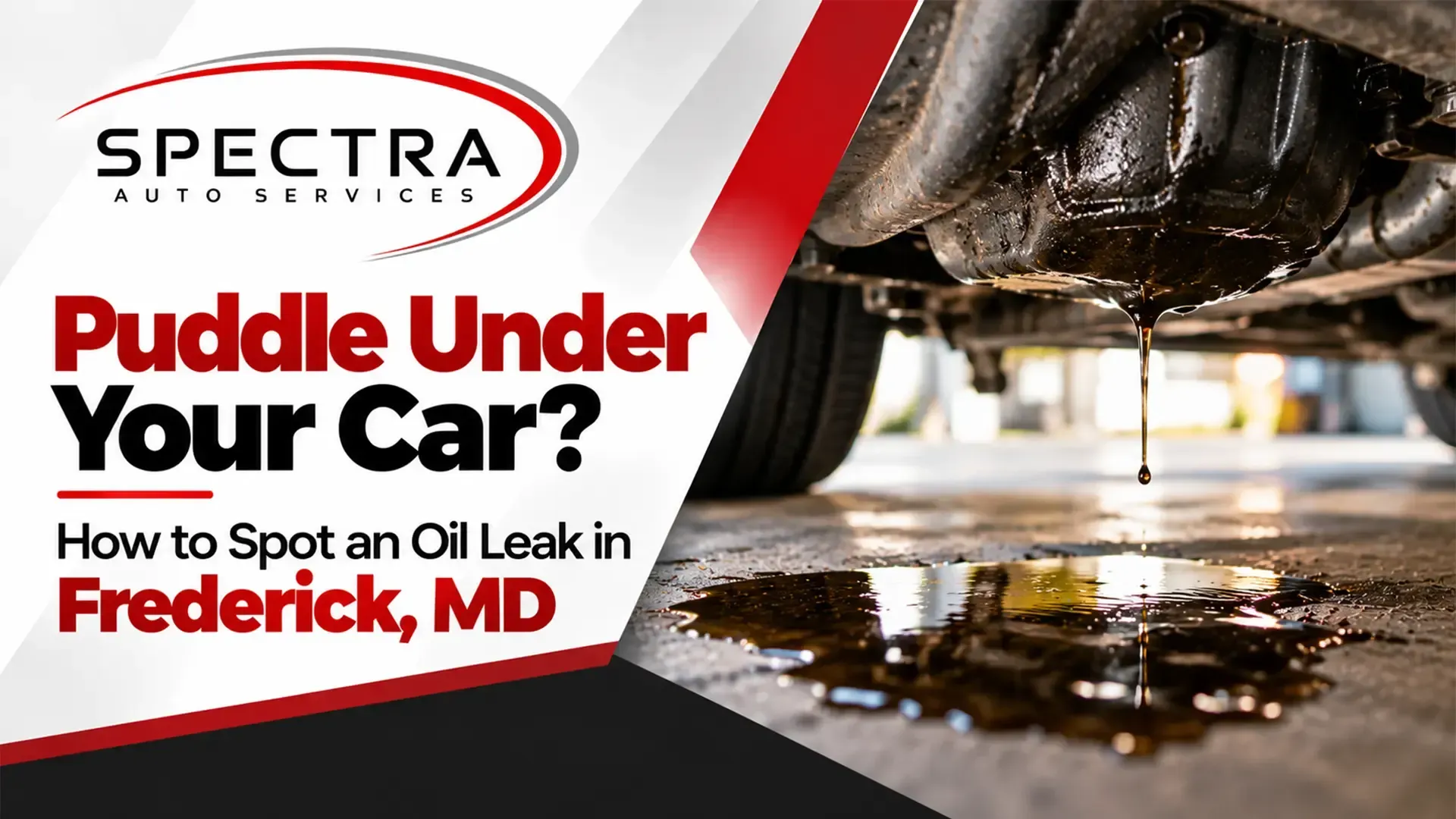
Puddle Under Your Car? How to Spot an Oil Leak in Frederick, MD
Discover More On:
A fresh driveway spot can be unsettling, but a few checks can help identify the fluid. Knowing how to spot an oil leak starts with its color, feel, location, and effect on the dipstick level. Our
engine oil leak repair service traces the source before any gasket or seal is blamed. Check for a puddle under the car before your next trip.
Is the Puddle Engine Oil or Another Fluid?
Engine oil is usually amber, brown, or black, with a slick feel and an oily smell. Coolant is often brightly colored and watery, while transmission fluid may look red or reddish-brown. Clear water near the passenger side after air conditioner use is often normal condensation.
Check the Color, Feel, and Location
Place white cardboard under the parked vehicle without crawling beneath it. Note the spot color, size, and position. Oil often appears beneath the engine, but airflow and shields can move it before it reaches the ground.
Avoid touching or smelling an unknown fluid closely because automotive fluids can irritate skin.
Frederick County vehicles are subject to Maryland's VEIP emissions testing every two years. That is separate from the one-time Maryland Safety Inspection required when a vehicle is titled or transferred. This inspection checks for fuel, oil, and other fluid leaks.
Check the Engine Oil Level Safely
Park on level ground, shut off the engine, and follow the owner’s manual for the proper waiting time. Wipe the dipstick, insert it fully, and read it again. A low level supports possible oil loss but does not prove where the oil went.
Some vehicles use an electronic oil-level display instead of a dipstick. Do not confuse an oil-life percentage with the actual oil level. Our Honda service in Frederick, MD, includes maintenance and engine testing for supported Honda models with oil-related concerns.
Common Engine Oil Leak Symptoms
The most common engine oil leak symptoms are dark spots, a falling oil level, a burning odor, smoke, or an oil warning. One clue alone may not identify the source, so watch for changes over several parking cycles when the oil level remains safe.
Oil Spots and a Falling Dipstick Level
Small spots can come from old residue, but fresh drops that return after cleanup suggest an active oil leak under the car. Mark the dipstick level and recheck it as directed by the owner’s manual. Do not keep adding oil without arranging an inspection, since overfilling also causes problems.
Burning Odors, Smoke, and Warning Lights
A burning smell or light smoke may mean oil is reaching a hot exhaust surface. Stop-and-go driving on US-15 or I-270 can make the odor more noticeable. Smoke entering the cabin, a rapid leak, or a red oil-pressure warning calls for a safe stop.
An oil-life message usually concerns maintenance timing, while a red oil-pressure light can signal inadequate lubrication. If routine service is due and no urgent warning is present, an oil and filter change uses the correct oil and filter for the vehicle. Routine maintenance does not repair a failed seal or gasket.
What Causes an Engine Oil Leak?
Oil leaks usually begin at a gasket, seal, plug, filter, housing, or damaged sealing surface. Oil can travel down the engine and collect far from its source, which is why the wettest lower point is not always the failed part.
Aging Gaskets and Seals
Repeated heating and cooling can harden valve cover gaskets, timing cover seals, oil pan seals, and crankshaft seals. Frederick’s hot summers and winter freezes create broad temperature swings. Age, mileage, engine design, and service history still matter more than weather alone.
Recent Service, Road Debris, and Crankcase Pressure
A loose drain plug, damaged plug gasket, pinched filter seal, or spilled residue can leave oil after service. Road debris may damage the oil pan. Restricted crankcase ventilation can also push oil past weakened seals.
What to Do When You Find a Puddle
Check the oil level and dashboard before deciding whether to move the car. The leak rate, oil level, smoke, noise, and warning lights matter more than the puddle diameter by itself.
Decide Whether the Car Is Safe to Move
Shut off the engine if the red oil-pressure light is on, the dipstick shows little oil, fresh oil is pouring out, or the engine is knocking. Arrange a tow or ask a repair professional for direction. A small seep with a correct level may allow a short trip, but it still needs diagnosis.
Record What You See Before the Inspection
Photograph the spot beside a ruler, note when it appeared, and record any recent service. Mention whether the odor or smoke shows up after driving on MD-26, East Street, or I-70. These details help the technician reproduce the condition.
How Our Shop Finds the Source
A proper inspection follows fresh oil to its highest active point and rules out spills or old residue. Spectra Auto Services may begin with an engine diagnostic service when the leak appears with warning lights, rough running, or other engine symptoms.
Clean, Trace, and Confirm the Leak
Our technicians review the oil level, service history, leak pattern, and affected components. Cleaning may reveal fresh seepage, while UV dye or heat cycles can help with a slow leak. We provide a written estimate for the confirmed repair.
Takeaways
Engine oil is usually amber to black and slick, but its path can be misleading. Check the level, photograph the spot, and watch for odor, smoke, noise, or a red oil-pressure warning.
Stop driving when oil is leaving quickly, the level is very low, the engine is noisy, or the oil-pressure light appears. Careful testing is the soundest way to confirm how to spot an oil leak and choose the correct repair.
Frequently Asked Questions
What color is engine oil when it leaks?
Leaking engine oil is commonly amber, brown, or black. Fresh synthetic oil may be light and translucent, while used oil is usually darker, so color should be considered with texture, location, and oil level.
Can I drive with a small oil leak?
You may be able to drive a short distance when the leak is minor and the oil level is correct. Do not drive if warning lights, smoke, or unusual noises are present. Because a leak can worsen or reach hot parts, arrange an inspection and monitor the level as the owner’s manual directs.
Why is there oil under my car after an oil change?
Oil after a recent service may be spilled residue, a loose drain plug, a damaged plug gasket, or a filter sealing problem. Check the level and contact the service provider promptly, especially if fresh drops continue or the oil-pressure light appears.
How can a mechanic find a slow oil leak?
A mechanic can clean the affected area and trace the first point where fresh oil appears. UV dye, inspection after a road test, or several heat cycles may help separate an active leak from older residue.
Does cold weather make oil leaks worse?
Cold weather can make an existing leak more noticeable as seals contract and oil flows differently during startup. It does not identify the failed part, so the gasket, seal, plug, filter, and crankcase ventilation system still require inspection.
Schedule Oil Leak Diagnosis in Frederick
If you need oil leak repair in Frederick, MD, our team can check the level, trace the leak path, and explain the findings before approved work begins.
Contact our Frederick team or call
(301) 695-5990 to schedule at Spectra Auto Services,
324 N East St, Frederick, MD 21701.