
Discover More On:

Burning Smell After Braking: Is It Dangerous?
Discover More On:
A burning smell after braking can be dangerous when it comes with smoke, pulling, weak braking, or a pedal that feels different. The odor often means excess heat is building up at the wheels.
If you notice these symptoms, stop in a safe place, let the brakes cool, and avoid driving again if the smell returns quickly. Our brake repair and safety inspection checks the complete system to identify potential problems before recommending repairs.
What a Burning Smell After Braking Means
A hot, sharp, or chemical odor usually means friction parts have reached a high temperature. The cause may be demanding driving, a brake that remains partly applied, contamination, or a recent repair.
Normal Heat Versus a Brake Problem
Brakes convert vehicle motion into heat every time you slow down. A faint, temporary odor may follow unusually hard braking or a controlled bed-in procedure after service. A strong odor during ordinary driving, an odor that keeps returning, or heat concentrated at one wheel points to a problem that needs inspection.
Why the Odor May Come From One Wheel
One brake can run hotter when its caliper piston, slide pins, hose, hardware, or parking brake mechanism does not release fully. You may also notice heavy brake dust, a pull to one side, or one wheel that feels hotter than the others. Do not touch the wheel or brake parts because they can cause burns.
Common Causes of a Burning Brake Smell
The most common causes involve excess friction, a part that remains applied, or material contacting a hot surface. The odor alone cannot identify which condition is present.
Heavy Braking and Brake Fade
Repeated hard stops, towing, or riding the brake pedal downhill can create overheated brakes. Excess heat can change friction performance and increase stopping distance. The Maryland MVA brake-fade guidance explains that repeated service-brake use can cause overheating and reduce braking force.
A Stuck Caliper or Parking Brake
A stuck brake caliper may keep a pad pressed against the rotor after you release the pedal. A restricted brake hose, seized slide, corroded hardware, or parking brake that does not release can produce a similar result. Continued driving can damage pads, rotors, seals, bearings, and nearby components.
Fluid, Grease, or Debris on Brake Parts
Brake fluid, axle grease, penetrating oil, or road debris can create an odor when it reaches a hot friction surface. Contamination may also change braking performance. A fluid leak, falling reservoir level, or soft pedal needs prompt attention because the hydraulic system depends on adequate fluid and pressure.
New Brake Parts and Bed-In Odor
New pads and rotors can produce a temporary odor as friction surfaces heat during the specified bed-in process. The smell should fade after the early driving period described by the technician. Smoke, pulling, or worsening odor should not be dismissed as normal new-part behavior.
When a Burning Brake Smell Is Dangerous
A burning brake smell becomes more concerning when the vehicle does not stop, track, or feel normal. The combination of symptoms matters more than odor strength alone.
Smoke, Pulling, or a Changed Pedal
Stop driving if you see smoke near a wheel, the vehicle pulls while moving or braking, the pedal becomes soft, or the stopping distance grows. A brake or ABS warning light adds another reason to stop and seek help. If you see flames, leave the vehicle, move away, and call 911.
Heat That Returns During Normal Driving
Heat that returns after a short, easy drive can mean a brake is dragging. A strong smell after ordinary Frederick errands is different from an odor after a long mountain descent. Repeated heat can weaken braking, damage friction parts, and boil moisture-contaminated brake fluid under severe conditions.
What to Do When Your Brakes Smell Hot
The safest first step is to reduce speed smoothly and stop away from traffic. Avoid a sudden hard stop unless road conditions require one.
Pull Over and Let the Brakes Cool
Park on a level, safe surface, turn on the hazard lights, and allow the brakes to cool naturally. Do not pour water on hot brakes because rapid cooling can damage components. Follow the owner's manual when securing the vehicle, and do not force a parking brake that seems stuck.
Know When to Request a Tow
Request a tow when there is smoke, fluid leakage, a warning light, severe pulling, grinding, weak braking, or a soft pedal. Towing is also appropriate when one wheel remains extremely hot or the odor returns soon after cooling. Driving farther to test the symptom can add heat before you know whether the brake will release.
How a Brake Inspection Finds the Cause
A proper inspection compares the whole brake system rather than replacing parts based on smell alone. The affected corner may reveal uneven wear, heat damage, restricted movement, or leakage.
Compare All Four Brake Corners
At Spectra Auto Services, we ask when the odor appears and whether you noticed pulling, noise, smoke, or a pedal change. We then compare pad wear, rotor condition, caliper movement, hoses, hardware, parking-brake operation, and visible hydraulic parts. Our brake pad replacement process includes measurements and related-component checks before the repair scope is presented.
Measure Before Recommending Repairs
Pad thickness, rotor condition, temperature differences, and component movement help separate normal heat from a dragging brake. Digital vehicle inspection photos can document visible concerns. We follow vehicle-specific electronic parking brake procedures for makes covered by our Subaru repair and maintenance service.
Frederick Roads That Can Build Brake Heat
Frederick County driving can expose brakes to repeated stops and changing grades. Trips near East Street and Downtown Frederick, descents on MD-340, and slowdowns on US-15 or I-70 can require frequent braking.
Use a lower gear when the owner's manual recommends it for a long descent, and leave room to brake smoothly. Our recent guide to squealing brakes in Frederick explains how local traffic, weather, and hills can expose symptoms. A brake inspection in Frederick, MD, is appropriate when an odor appears during ordinary driving.
Takeaways
When your brakes smell like burning, move to a safe place and let them cool. Heavy braking may create a temporary odor. However, smoke, pulling, a soft pedal, a warning light, or heat at one wheel can signal a brake that is not releasing or another unsafe condition.
Do not touch hot brake parts or pour water on them. Arrange an inspection when the odor returns, and request a tow when braking performance changes or the vehicle shows serious warning signs.
Frequently Asked Questions
Can I drive when my brakes smell like burning?
You should not keep driving if the odor returns quickly or comes with smoke, pulling, weak braking, or a changed pedal. If it follows one demanding stop and the vehicle feels normal, let the brakes cool before deciding whether to move it for service.
Can new brakes produce a burning smell?
Yes, new brakes can produce a temporary odor during the specified bed-in period. The smell should lessen, while smoke, pulling, or worsening odor calls for an inspection.
What does a stuck brake caliper smell like?
A stuck brake caliper can create a sharp, hot, chemical, or scorched smell near one wheel. Odor varies by pad material and contamination, so temperature differences, uneven dust, pulling, and measured component movement are more useful than smell alone.
How long should overheated brakes take to cool?
Overheated brakes may need 30 minutes or longer to cool, depending on temperature, vehicle weight, airflow, and the cause of the heat. Cooling time does not prove the problem is gone, especially when a caliper or parking brake remains applied.
Can brake fluid cause a burning smell?
Yes, leaking brake fluid can create an odor if it reaches a hot surface, and contamination can affect friction. A soft pedal, low reservoir level, warning light, or visible fluid calls for prompt inspection and may make towing the safer choice.
Schedule a Burning Brake Smell Inspection in Frederick
Spectra Auto Services can check the pads, rotors, calipers, hoses, hardware, parking brake, and hydraulic system to find the source of excess heat. Call
(301) 695-5990 to schedule an inspection, or visit our
full-service auto repair shop in Frederick at
324 N East St, Frederick, MD 21701. We will document the findings and explain the repair options before authorized work begins.
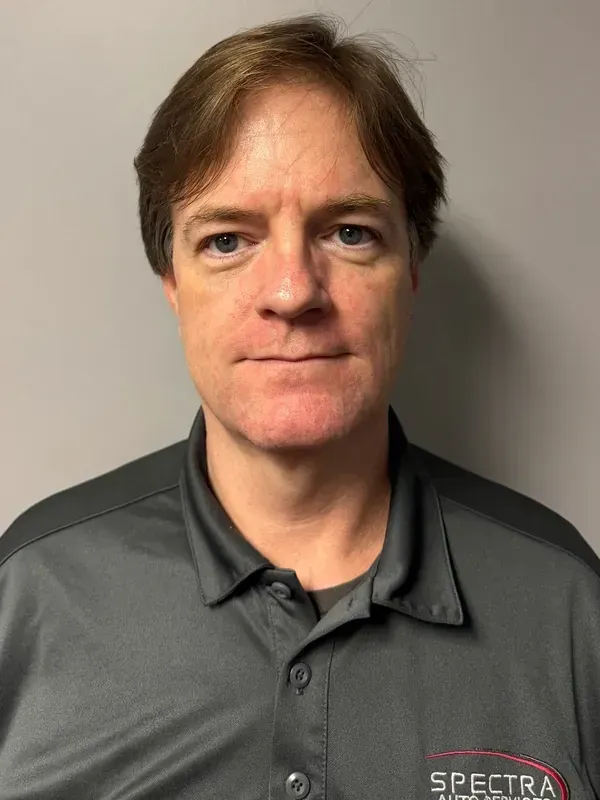
Chris Adams
Hi, I’m Chris Adams, owner of Spectra Auto Services in Frederick, Maryland. I’ve spent 33 years in auto repair, including five years as a technician and 26 years as a service advisor and manager. For the past two years, I’ve owned the shop where I’ve worked since 1993.
I got into the trade because I enjoyed the challenge of figuring out why a vehicle wasn’t running right. The satisfaction came from fixing the problem and seeing the vehicle back on the road. My hands-on background is in auto electrical repair and drivability diagnostics.
I’m a 1993 Lincoln Technical Institute graduate, and I earned ASE Master Technician and Advanced Engine Performance Specialist certifications during my years in the bay. Today, I focus on running a shop built on transparency, honest recommendations, and digital vehicle inspections. I also prioritize ongoing training to keep our team up to date with the latest vehicle systems.
I’ve called Frederick County home for 40 years and served drivers here at Spectra for 33 of them. If you’re looking for an honest auto repair shop in Frederick, MD, our team is here to help.